

5 Best AI Scribes in 2025
.jpg)


The best AI scribes help clinicians capture patient conversations, cut charting time, reduce burnout — and leave work where it belongs.
The market has exploded in 2025 with options ranging from lightweight startup tools to enterprise-scale platforms tied deeply into on-prem EHRs. But how do you know which tool is best for your clinical notes, patients, and practice?
This guide compares the top AI scribes of 2025. Whether you’re a solo clinician, a growing group practice, or part of a large health system, you’ll have everything you need to find the right tool for you.
Comparison chart: AI scribes at a glance
How we evaluated the best AI medical scribes
We focused on what matters during packed clinic days:
- Note quality: Chart-ready clinical documentation with minimal edits.
- Ease of use: Setup time, learning curve, and how it fits into your day.
- EHR compatibility: Integrations and extensions that fit your workflow
- Support: Access to real humans when you need help.
- Pricing & plans: Transparent costs and accessible trials for real-world testing.
- Best fit: Which organizations each AI scribe serves best (small clinics vs. enterprise).
Here are the top tools, and where they can help the most.
Top AI medical scribe tools for 2025 [Updated]
1. Freed - Best AI scribe for small and midsized clinics (2-50)
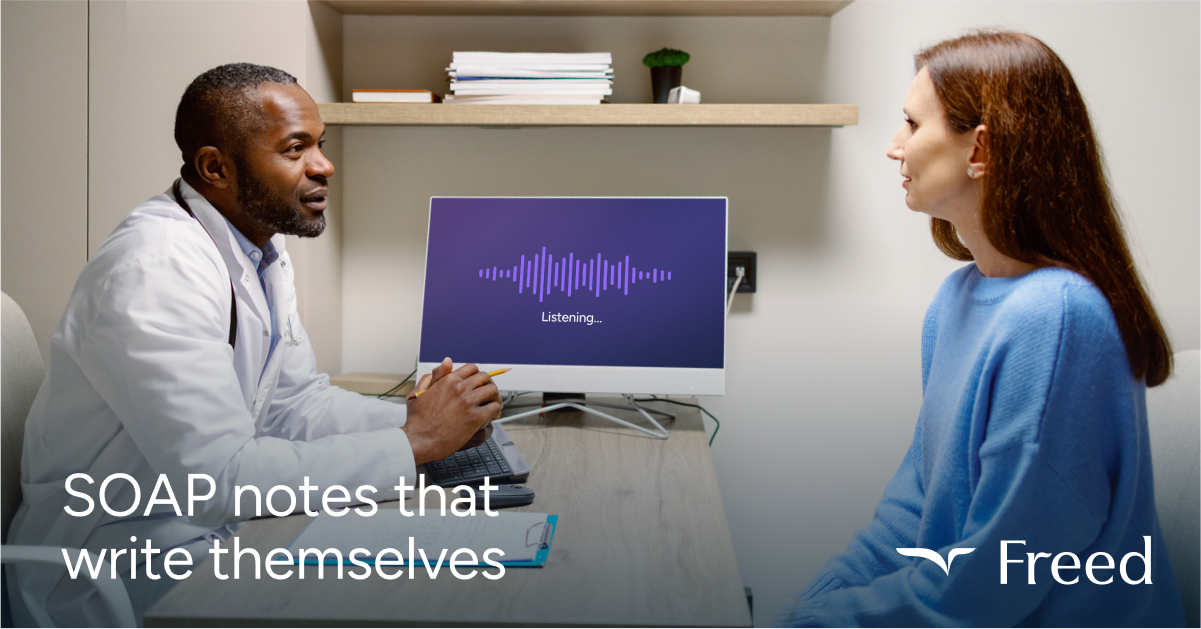
Most ambient scribes stop at note-taking. Freed is purpose-built to adapt to your specialty and fit seamlessly into the daily workflow:
- Before the visit: Get past visit summaries, chat with Freed to dig into patient note history, key follow-ups, and care summaries so you walk into the room fully prepared.
- During the visit: Freed captures conversations in real time and generates accurate AI medical notes with templates that learn your preferences over time.
- After the visit: Push notes directly into any browser-based EHRs with just one-click using Freed’s EHR push feature. Then send patient-friendly instructions, auto-generate clinical letters, ICD-10 codes and push the information seamlessly into a web-based EHR.
Freed's ambient scribe is engineered for accuracy, with automatic speech recognition specifically trained for clinical environments and medical terminology.
Freed works on any device, sets up in minutes (no IT required), and adapts to each clinician’s style with customizable and learned templates. It’s also HIPAA and HITECH compliant with leading data security and privacy standards and zero storage of patient recordings.
That’s why more than 25,000 clinicians and 1,000+ organizations already trust Freed to reduce documentation time, help burnout, and improve patient care.
Best fit: Clinics with 2–50 clinicians looking for a purpose‑built scribe that scales without enterprise overhead.
Key features
- Get started in minutes — no IT, and no lengthy onboarding.
- Get EHR-ready SOAP notes in minutes. Check out your visit transcript at any time.
- Use one-click EHR integration to transfer notes directly into web-based EHRs.
- Adapts to your style, format, and templates through self-learning technology.
- Supports multiple languages and works on desktop, mobile, and tablet.
- Available for individuals and scalable for larger groups with custom plans.
Pricing
- Offers a 7-day free trial
- $90 per month for 1 seat (billed annually)
- $84 per clinician per month for 2–10 seats (billed annually),
2. Nuance DAX — best for Epic-led hospital systems
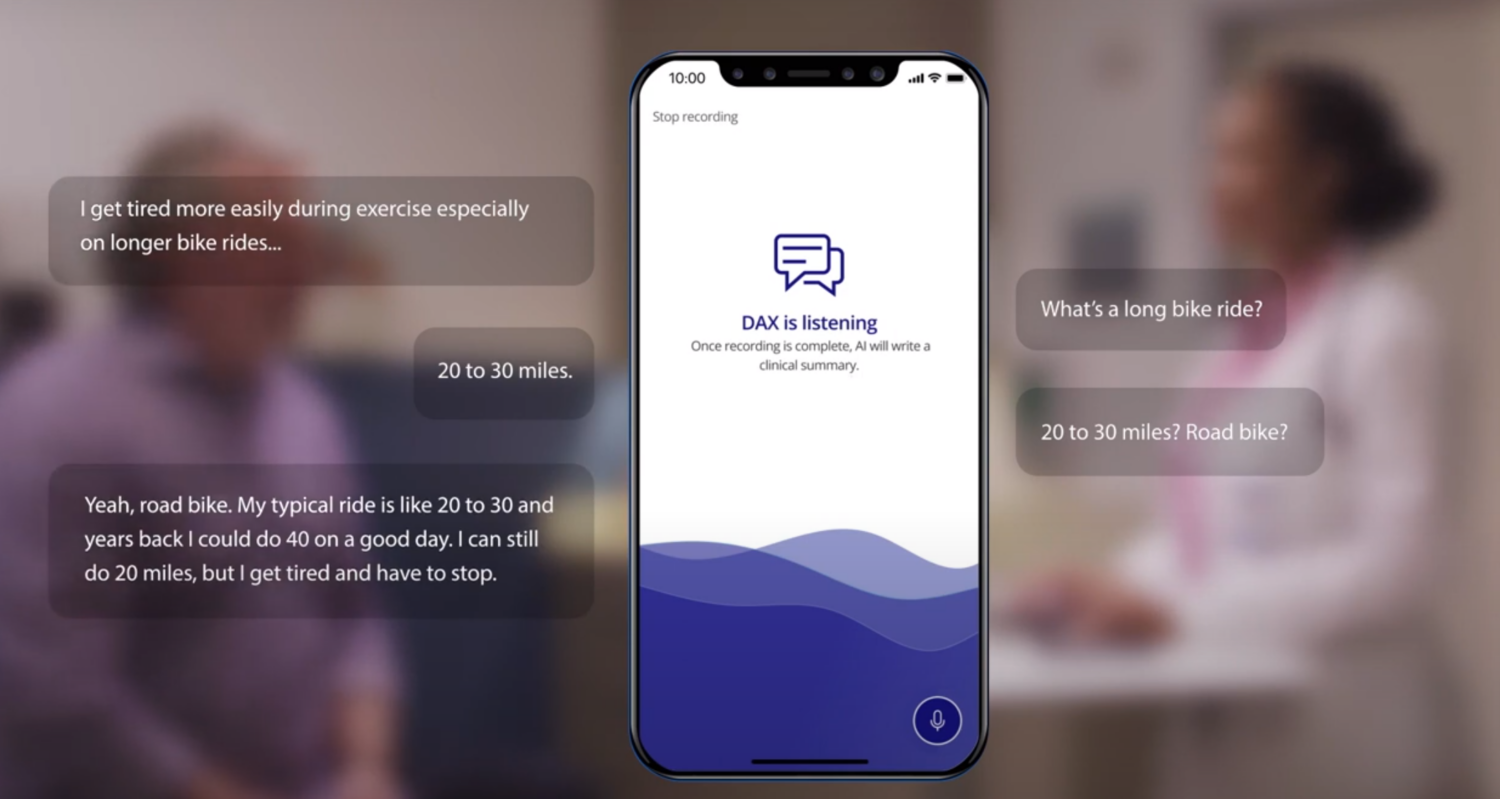
Nuance DAX, from Microsoft’s Nuance division, is an established scribe for major enterprises. It specializes in deep Epic and Meditech integration and uses human QA to ensure accuracy in the medical documentation.
With a heavy implementation process and a premium price tag, it’s built for hospital-scale deployments — not small practices.
Best fit: Large hospital systems embedded in Epic or Meditech.
Key features
- Enterprise-grade Epic and Meditech integration
- Human quality assurance for notes
- Strong enterprise compliance and IT support
- Configurable organizational templates and formatting rules
- EHR integration with clinical briefing synthesis
Pricing
~$830/clinician/month. No free trial.
3) Abridge — best AI scribe for Epic enterprises that want LLM-enhanced notes
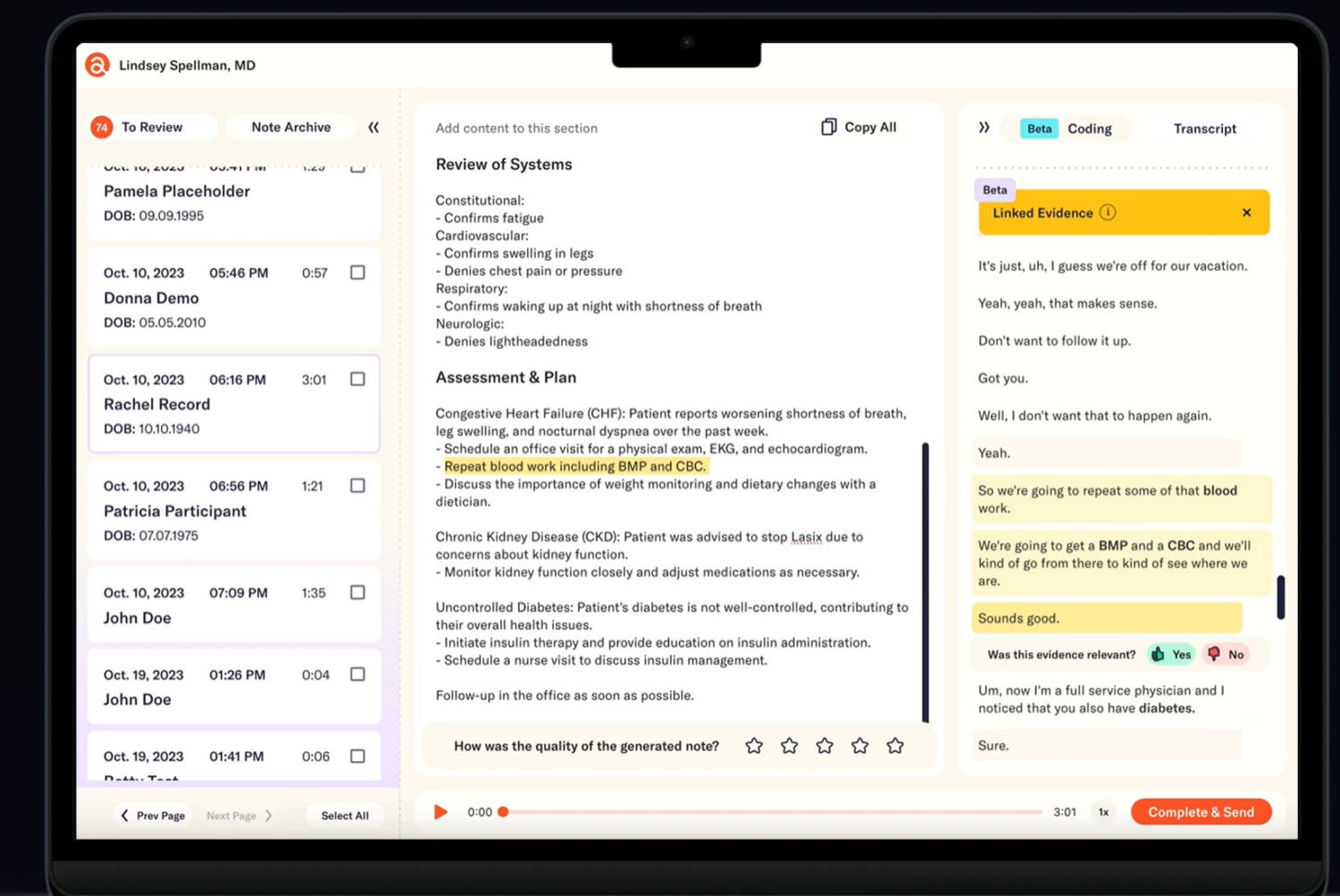
Abridge is an AI medical scribe with a focus on generative AI note-taking for Epic users.
It follows patient-clinician conversations and enhances notes with LLM-based summarization and formatting. Like other enterprise solutions, Abridge requires IT-heavy deployment and is not designed for small practices.
Best fit: Epic-based enterprises
Key features
- LLM-powered note generation
- Deep Epic integration
- Enterprise rollout and support
- Enterprise-grade platform with custom governance controls for compliance and security
- Provides analytics and reporting for usage tracking across health system
- Features single sign-on (SSO) for streamlined clinician access
Pricing
$208/clinician/month. No free trial.
4. Suki — best AI scribe for multi-specialty groups prioritizing workflow shortcuts

In addition to AI note generation, Suki provides voice commands for retrieving patient information, creating orders, and generating referral letters. This makes it appealing for providers who want hands-free workflow management during packed clinic days.
However, setup is not instant — it usually requires administrative coordination and IT support.
Best fit: Large, IT-supported groups.
Key features
- Dictation and task automation (orders, referrals)
- Voice commands for orders, referrals, and patient lookups
- Integrations with Epic, athena, Meditech, Cerner
- Workflow add-ons for complex practices
Pricing
~$299/clinician/month. No free trial.
5. DeepScribe — best AI scribe for Oncology and Cardiology
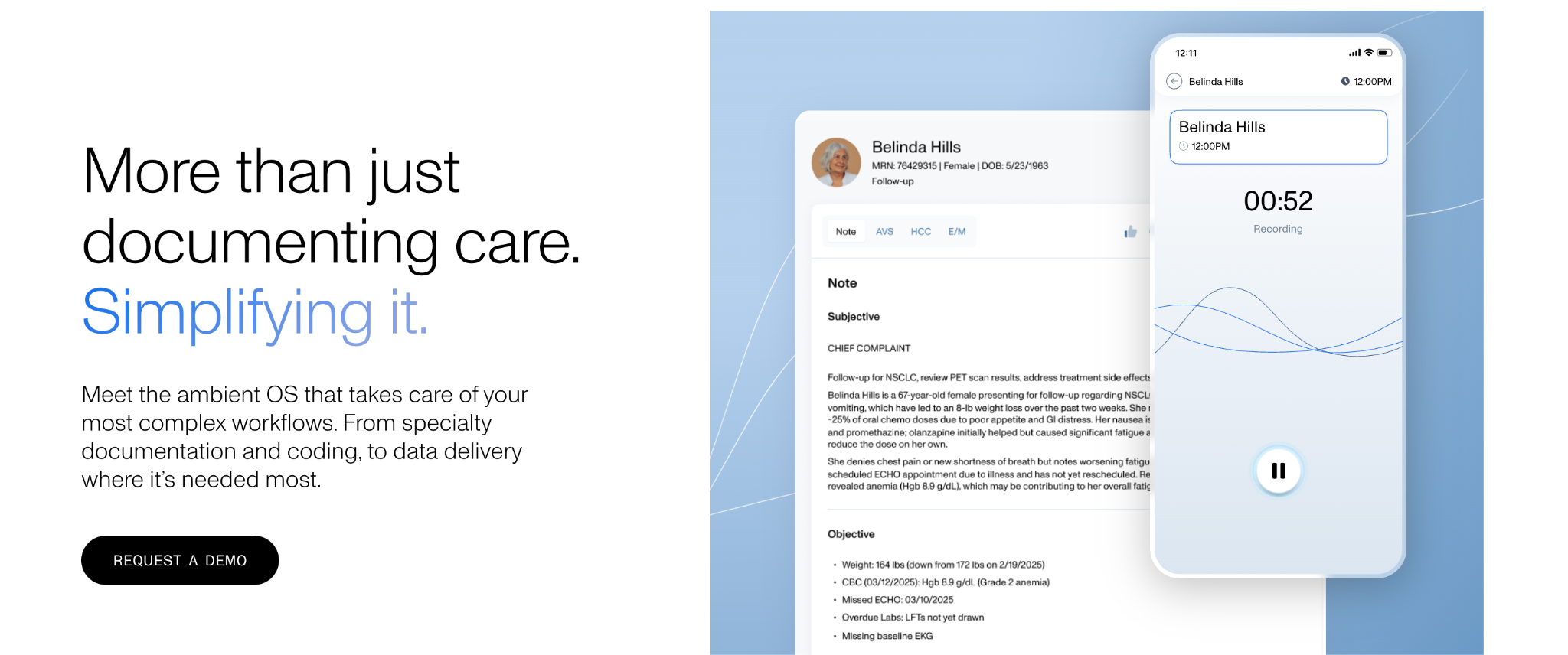
DeepScribe is an enterprise-oriented scribe that specifically supports Oncology and Cardiology. It emphasizes compliance and billing accuracy by embedding E&M coding suggestions directly into draft notes, so organizations can maintain appropriate documentation for reimbursement.
DeepScribe is a robust, AI-first solution, but onboarding typically requires a sales demo and close coordination with their team. The price point and process make it less accessible for independent practices.
Best fit: Oncology and Cardiology orgs with large bandwidth and budget
Key features
- AI notes enriched with built-in E&M coding prompts
- Integrations with athena, eCW, Epic, AdvancedMD
- Focus on compliance and billing efficiency
- Sales-driven setup and support structure
Pricing
~$750/clinician/month. No free trial.
6. Heidi Health — best AI scribe for UK/Australia-based clinics
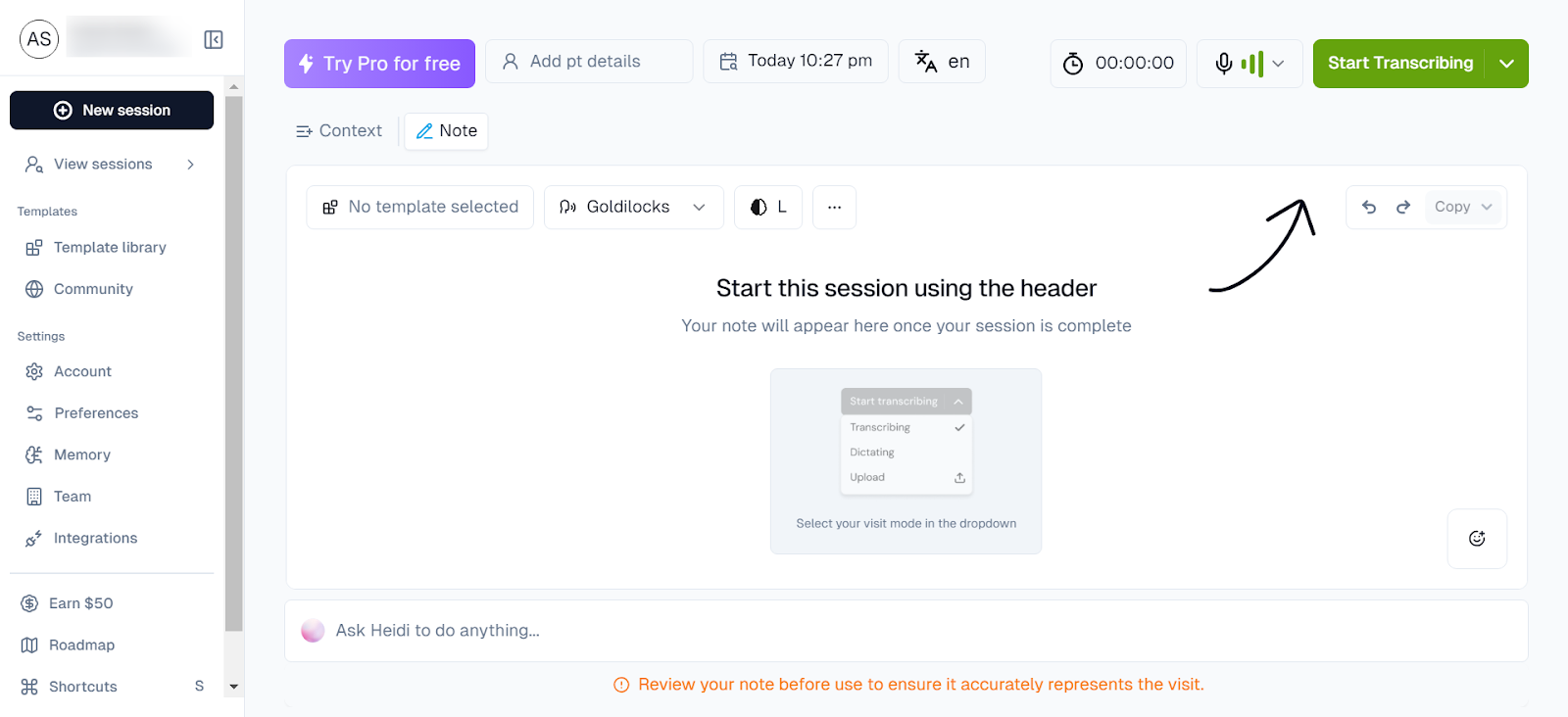
Heidi Health supports healthcare providers in the UK and in Australia, specifically building to support documentation tasks with those environments and policies in mind.
It provides quick signup, a strong clinician community, community-shared templates, and a limited free plan — though notes on this tier may require more editing.
Best fit: Orgs in Australia and UK who build and optimize their own templates.
Key features
- Natural command interface for real-time note modifications
- Silent mid-visit addendum capability without verbal communication
- Customizable templates with AI-assisted creation
- Automated form-filling and letter-generation capabilities
Pricing
- Free plan
- Paid plans start at $99 when billed monthly
7) Tali — best AI scribe for teams exploring dictation + in-app Q&A

Tali offers a hybrid of AI scribe that combines automated note generation with dictation capabilities, allowing clinicians to capture notes by speaking directly into the system.
In addition, Tali features an “Ask a medical question” tool, where providers can query the app for diagnostic criteria, treatment options, or clinical guidelines in real time. This flexibility is best for clinicians who prefer dictation-first workflows or want both documentation and quick-access medical reference in one platform.
However, its template customization and EHR integration options are less advanced than those of competitors.
Best fit: Practices experimenting with dictation-heavy workflows.
Key features
- Dictation and transcription tool for faster capture
- Ask-a-question clinical reference assistant
- Basic AI-generated notes with static templates
- Free entry-level tier for trialing functionality
Pricing
Free tier available; paid plans unlock advanced features.
8. NoteMD
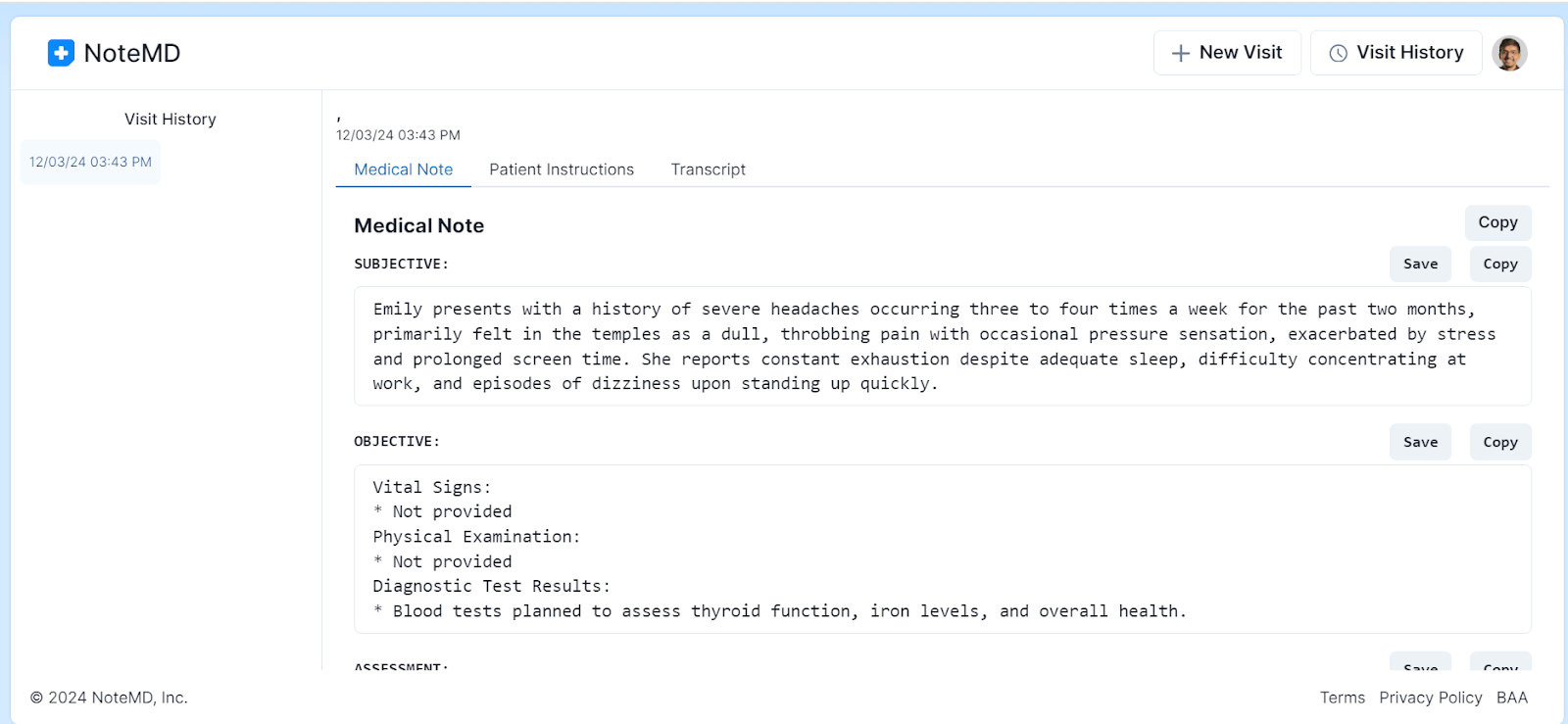
NoteMD simplifies documentation with a record-and-review process. This is a simple AI scribe that lets you record your visit in real time or upload the visit’s transcript to generate SOAP notes. Accessible on all devices, it offers flexibility and efficiency for medical practices. This is a straightforward tool that lacks the advanced features of more purpose-built scribes, but supports its core use case well.
Best fit: Individual practitioners looking for a light note-taking solution.
Key features
- One-click visit initiation across all devices (mobile, tablet, desktop)
- Real-time transcription and documentation during patient encounters
- Automatic SOAP note generation tailored to physician's writing style
- Direct EHR integration with easy import functionality
- Secure, HIPAA-compliant platform with no third-party access
Pricing
- 7-day free trial available
- $90 per month for 1 seat (billed annually)
- $84 per clinician per month for 2–10 seats (billed annually)
9. Nabla

Nabla is an ambient AI medical assistant transforming clinical encounters into structured notes within seconds. The comprehensive solution prioritizes efficiency and data security while integrating with existing EHR systems.
Best fit: Larger health systems with deep integrations
Key features
- Sub-20 second note generation for any consultation type
- Multiple clinical note templates customizable across specialties
- Support English, French, and Spanish as speaker languages, with more in Beta
- Complete pre-charting and medical codification capabilities
- Real-time clinical decision support and patient summary generation
- Direct EHR integration for streamlined workflow
Pricing
- Free to try with paid plans starting at $119/seat/month
What is an AI scribe?
An AI scribe quietly takes care of your clinical documentation while you focus on the patient in front of you.
These tools listen to the patient-clinician conversation and turn it into structured clinical documentation. Instead of typing or dictating notes after hours, clinicians can leave visits with SOAP notes and summaries ready to review.
Most AI medical scribes work in real time or from recordings, connect easily with electronic health record (EHR) systems, and are built with HIPAA-compliant security.
The goal is simple: lighten the documentation load so you can spend more time practicing medicine and less time typing.
Benefits of using AI medical scribes
AI medical scribes have a real impact on clinician happiness: Studies show clinicians spend 13.5 hours a week on documentation, with 3.2 hours outside working hours.
The best AI scribe software doesn’t just save clicks — it gives clinicians back hours of their lives. Here’s what practices gain:
- Time back: AI scribes capture and structure notes so you can finish charts during clinic, not after dinner.
- Better balance: With documentation handled in real time, evenings and weekends belong to you again.
- More presence with patients: You can focus on listening and connecting, knowing every detail is captured.
- Consistent, high‑quality notes: Chart-ready documentation that reflects your style and reduces second‑guessing.
- Scales with your team: Easy onboarding and shared templates make it simple to support growing groups without piling on admin work.
Clinicians tell us the biggest benefit isn’t just faster charting — it’s the relief of leaving work at work.
“This was the quickest spread of technology and quickest adoption of new technology in the medical group ever." — Dr. Kristine Lee, MD
How to choose the best AI medical scribe software
Every practice is different, so the best AI scribe depends on your setting and workflow. Here’s what to look for:
- Accuracy you can trust: Minimal editing needed, even with complex medical terms.
- Effortless setup: Minutes, not months. No IT tickets, no downtime.
- EHR compatibility: Works smoothly with your existing system — whether through direct integration or extensions that sit on top of your EHR.
- Built‑in security: HIPAA compliance and strong encryption should be table stakes.
- Transparent pricing: Clear costs with free trials so you can validate real‑world fit.
- Responsive support: Real people ready to help when you need it.
Most AI medical scribes offer free trials — take advantage to see which one truly lightens your load in daily practice.
Ready to spend less time on charts and more time with patients?
Start your free trial with Freed — validate note quality and workflow fit in a week.
FAQs
Frequently asked questions from clinicians and medical practitioners.


Free yourself for better things.


San Francisco, CA 94104
Security


Warning: Freed may cause happiness.